

After Bungoma, Edwin Sifuna Is No Longer Easy to Ignore
By Kizito Namulanda
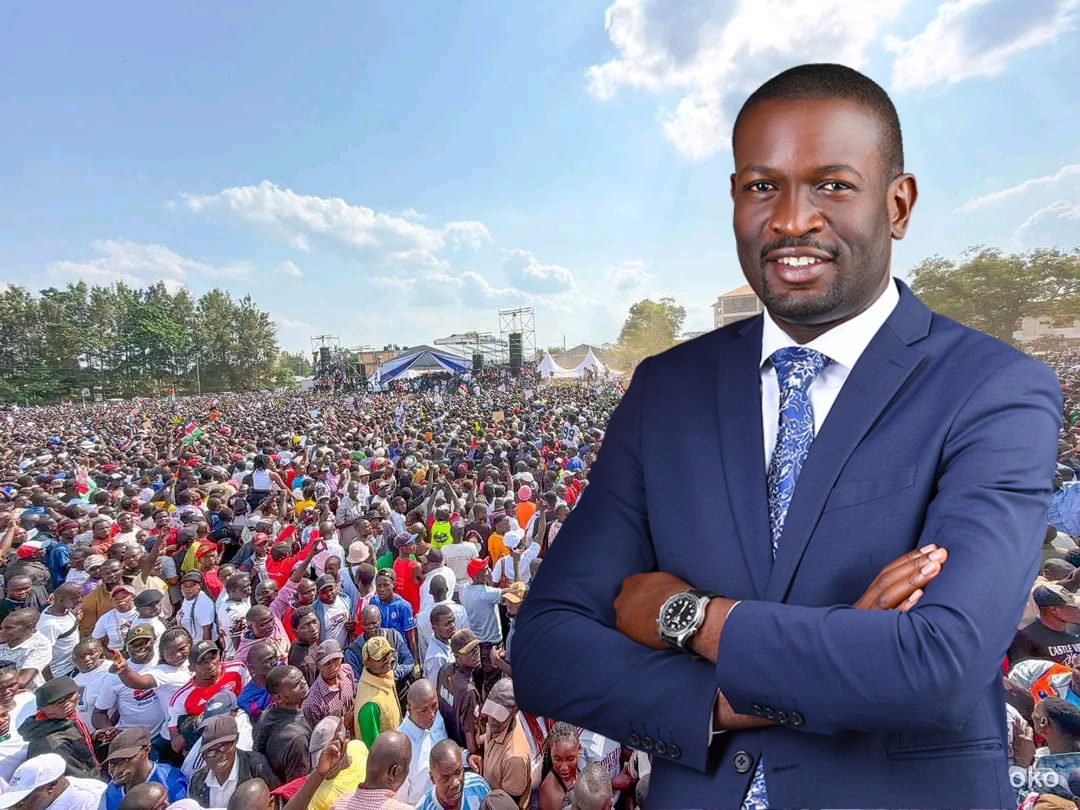
Edwin Sifuna's weekend tour of Western Kenya—particularly Trans Nzoia and Bungoma—generated a wave of political excitement that few had anticipated. The large crowds, enthusiastic reception, and growing calls from local leaders and others accompanying him to set his sights on the presidency signaled that his Linda Mwananchi movement is evolving into something much bigger than a mere series of county tours.
Whether that excitement translates into a viable national presidential campaign remains to be seen. Kenyan politics has repeatedly demonstrated that regional popularity does not automatically convert into nationwide electoral success. The real test for Sifuna will be whether he can replicate the Western Kenya momentum across the country and sustain it over time.
Bungoma Marks a Political Turning Point
Even so, Bungoma marked an important turning point. Although Sifuna's county tours have already reached double digits, his homecoming carried far greater symbolic significance. It was perhaps the clearest indication yet that he is prepared to seriously position himself for a run at State House. From this point forward, every public appearance, political alliance, and policy statement he makes will attract even greater scrutiny from both supporters and opponents.
Within Western Kenya itself, however, one conclusion is becoming increasingly difficult to ignore: Sifuna has firmly established himself as a political force that cannot be dismissed. Speaker of the National Assembly Moses Wetang'ula and Prime Cabinet Secretary Musalia Mudavadi can no longer assume they have an uncontested grip on the region's political imagination. The events of the weekend suggest they now face a significant political challenge.
Why Bigger Rallies Are the Wrong Response
Some political strategists may argue that the government's response should be an equally massive public mobilization to demonstrate its own popularity. That, however, would be a mistake.
The crowds that turned out for Sifuna were not merely responding to campaign theatrics. They were expressing a deeper aspiration—the desire to see one of their own ascend to Kenya's highest office. Underlying that sentiment is another equally powerful question: despite having two of the region's most prominent leaders occupying senior positions in government, why do many ordinary residents feel that their daily lives have not improved in any meaningful way? That perception is the real political battleground.
Development, Not Spectacle, Wins Public Confidence
Attempting to outdo Sifuna through larger rallies or bigger public events risks missing the point entirely. The more effective response for Wetang'ula and Mudavadi would be to demonstrate, quickly and convincingly, the tangible benefits of being in government. Political influence ultimately carries greater weight when citizens can see it reflected in improved livelihoods, better infrastructure, expanded economic opportunities, and more responsive public services.
If only a small fraction of Western Kenya's population experiences those benefits, the political challenge will persist. However, if a clear majority of residents can genuinely feel the dividends of government, the region's political calculations could change significantly.
From Political Theatre to People-Centred Leadership
The strategy, therefore, needs to shift. Rather than relying on grand displays of power—convoys of fuel-guzzling vehicles, helicopter landings in impoverished villages, and expensive project launches whose ceremonial costs sometimes appear to exceed the value of the projects themselves—leaders should embrace a more grounded and people-centered approach. While such spectacles create impressive images for television and social media, their impact on the ground often disappears as soon as the entourage departs.
What people need are not bigger ceremonies but a more effective development framework—one that distributes projects more equitably, delivers measurable improvements, and leaves citizens convinced that government is working for them rather than merely performing for them.
Sifuna's Next Test: Going National
For Sifuna, the challenge is equally formidable. Generating excitement in Western Kenya is one thing; transforming that enthusiasm into a credible national movement is another. His next assignment is to replicate the same energy in at least 25 counties across the country while maintaining organizational discipline, policy consistency, and public momentum all the way to August 10, 2027. That will require far more than large crowds. It will demand coalition-building, a compelling national message, and the ability to persuade voters that his appeal extends beyond regional identity.
A New Chapter in Kenya's Political Conversation
Ultimately, the weekend may not have determined Kenya's next president, but it has undeniably reshaped the country's political conversation. Sifuna has announced himself as a serious contender on the national stage. The question now is whether his opponents in Western Kenya respond with political spectacle or with tangible results—and whether he can convert regional enthusiasm into a truly national movement.
The writer is a Journalist, Narrative Strategist and Communication Consultant.
