

Western Kenya Leaders Must Demand More for Sugarcane Farmers
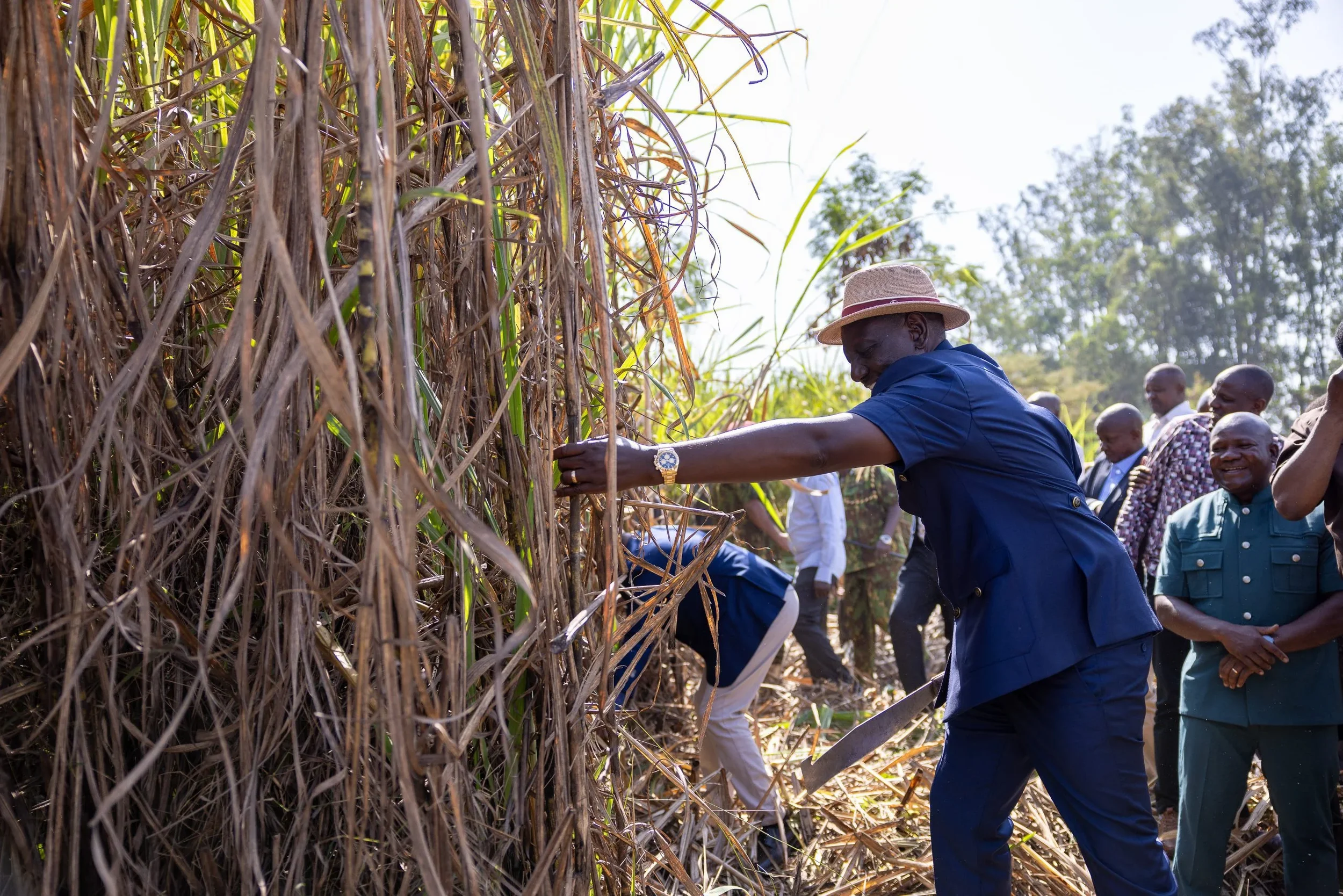
President William Ruto joins cane cutters in harvesting sugarcane during his visit to Western Kenya as Kakamega Governor Fernandes Barasa and other leaders look on. Photo: Courtesy
By Kizito Namulanda
The Government has repeatedly declared its commitment to reviving Kenya's sugar industry. In Western Kenya, where sugarcane farming remains the backbone of thousands of households and a major driver of local economies, such promises are always welcome.
The sugar industry in the region is supported by several major factories, including Mumias Sugar Company, Nzoia Sugar Company, West Kenya Sugar Company, Butali Sugar Mills, Busia Sugar Industry, Kibos Sugar and Chemelil Sugar Company, alongside other millers that depend on cane from the wider Western Kenya sugar belt.
For decades, however, the industry has faced repeated crises, including factory closures, financial difficulties, delayed payments to farmers, huge debts, allegations of mismanagement, cane shortages and competition from cheap sugar imports. Many farmers have watched factories shut down or struggle to operate while mature cane remains in their fields, undermining livelihoods and weakening confidence in sugarcane farming.
That is why any declaration of the Government's intention to reform the industry is always music to the ears of many people in the Western region.
But farmers need more than promises and celebrations. They need meaningful action.
President William Ruto recently hosted winners of the Kenya Schools and Colleges Music Festival at the Bungoma Mini State Lodge following the national competitions held at Kibabii University. After the gala, the President addressed residents at Bukembe market, where he pointed to the payment of sugarcane farmers within seven days of delivering their cane as one of the successes of his administration's efforts to revive the sugar industry.
That is certainly a positive development. For years, delayed payments have left farmers struggling to meet basic needs, service loans and reinvesting in their farms.
But paying a farmer quickly is only part of the solution. The bigger question is: How much is the farmer being paid?
This is where leaders from Western Kenya must speak louder and demand more from the national government instead of simply joining the chorus celebrating the payment of farmers within seven days of delivering their cane.
Over time, the price of sugarcane has dropped from about KSh6,500 per tonne to KSh5,500, yet the cost of producing that same cane continues to rise. Fertiliser prices remain high. Labour is more expensive. Transport costs have increased. The cost of land preparation and other farm inputs has not gone down.
How, then, can farmers be expected to celebrate receiving KSh5,500 quickly when they were previously earning KSh6,500 per tonne under far less expensive production conditions?
A seven-day payment cycle is good. But quick payment at an unfair price does not amount to the revival of the sugar industry.
It is for this reason that Western leaders should make the restoration of a fair and competitive cane price their biggest battle. If they are genuinely committed to empowering sugarcane farmers, they must push for the price per tonne to return to at least KSh6,500.
There was a time when competition among sugar millers pushed cane prices upwards. Companies competed for cane, and farmers benefited. Mumias Sugar, at one point, led the way by paying KSh6,500 per tonne about three years ago. The current pricing formula, however, has left many farmers questioning whether their interests are truly being protected.
A formula that reduces farmers' earnings while production costs continue to rise cannot be described as a formula for revival.
Governors, MPs, senators and other political leaders from sugar-growing counties must rise above the usual chorus of praise whenever the national government announces a minor intervention. They should collectively demand answers: Who determines the price of cane? How is the price calculated? Why has the farmer's share fallen while the cost of production continues to rise? These are questions that deserve urgent attention.
There are other serious problems facing sugarcane farmers, including the periodic closure of factories to allow cane to mature. While the intention behind such closures may be understandable, poor coordination has caused enormous losses.
When factories close, mature cane can remain in the fields for too long, leading to a loss of weight and tonnage. Farmers in low-lying areas are particularly vulnerable. Once the rains begin, some farms become inaccessible. Cane that should have been harvested and delivered to factories becomes trapped in the fields.
The result is devastating: reduced tonnage, delayed harvesting and massive financial losses for farmers.
Reviving the sugar industry, therefore, requires a comprehensive approach. But at the centre of that revival must be the farmer. And for the farmer, nothing matters more than receiving a fair price for every tonne of cane produced.
The fight to revive the sugar industry must therefore go beyond reopening factories, leasing mills and shortening payment periods. It must put more money into the farmer's pocket.
Western leaders must push the national government to review the current pricing formula, protect farmers from rising production costs and restore the price of sugarcane to at least KSh6,500 per tonne. Anything less is not the revival farmers have been waiting for.
The message from Western Kenya should be clear: paying farmers faster is welcome, but paying them fairly is non-negotiable.
Send feedback to:editor@kolleanews.com
